

Introduction
Pentachronism is an emerging conceptual framework that examines how individuals, cultures, and systems operate across multiple temporal layers at once. In an era defined by rapid digital acceleration and overlapping historical narratives, the idea of pentachronism offers a fresh lens for understanding how time influences decisions, identities, and societal patterns. Although the term itself is still gaining traction, the underlying principles resonate widely in fields ranging from psychology and organizational strategy to anthropology and media studies. By looking at events, behaviors, and beliefs through five distinct temporal dimensions, pentachronism encourages a deeper awareness of how past, present, and future pressures shape human experience. This layered perspective is especially valuable today, as people encounter unprecedented amounts of information while managing shifting timelines in both personal and professional contexts.
In its most practical sense, pentachronism helps explain why individuals often feel mentally stretched between what has been, what is, and what will be. For example, professionals might simultaneously balance long-term career planning, short-term project deadlines, immediate personal obligations, and lingering memories or expectations rooted in earlier phases of life. On a broader level, societies negotiate pentachronistic tensions when they try to preserve historical traditions while adopting new technologies or reinventing outdated institutions. Each of these scenarios embodies the heart of pentachronism: the coexistence of multiple temporal realities influencing a single moment of action. As we explore this concept in greater depth, it becomes clear that pentachronism is not merely a theoretical idea but a living phenomenon that shapes how people interpret meaning, allocate energy, and make choices. Understanding how these five time layers interact provides valuable insight into modern complexity—and, ultimately, empowers individuals and organizations to navigate that complexity more intentionally and effectively.
The Origins and Evolution of Pentachronism
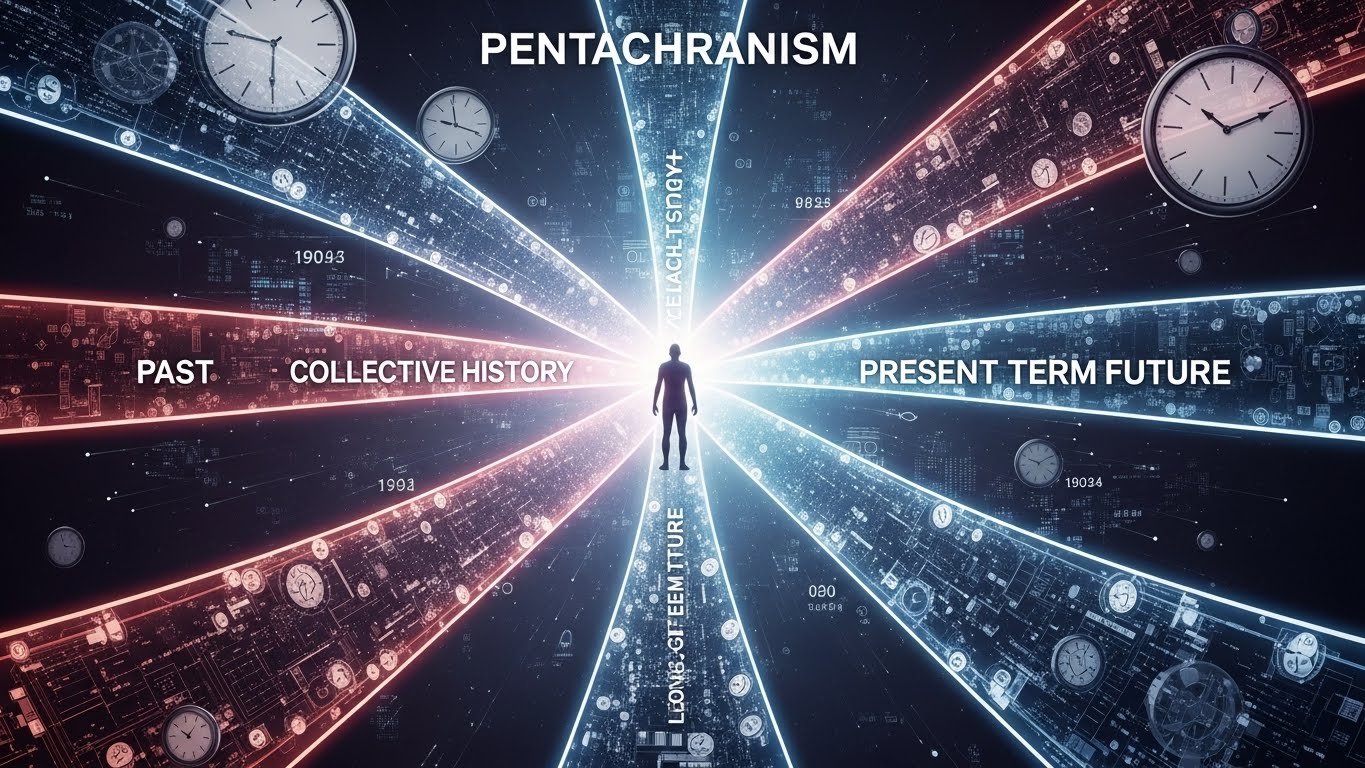
Pentachronism, though a relatively new term, has roots in long-standing philosophical debates about the structure of time. Thinkers ranging from ancient Greek scholars to modern sociologists have attempted to define how human consciousness relates to temporal flow. Pentachronism expands on these traditions by proposing five simultaneous temporal layers: personal past, collective history, lived present, anticipated future, and aspirational long-term trajectory. Each layer represents a distinct yet interconnected mode of temporal experience. For instance, the personal past shapes emotional responses, while collective history influences cultural norms and shared identity. Meanwhile, the lived present dictates immediate action, the anticipated future informs planning, and the aspirational trajectory represents broader life purpose. Together, these layers create the pentachronistic framework. Although academic attention to pentachronism is still developing, its emphasis on multifaceted time perception aligns with recent research on cognitive load, attention fragmentation, and digital-era temporal distortion.
As pentachronism evolves, it increasingly appears in interdisciplinary dialogues. Fields such as behavioral economics, organizational psychology, and even UX design reference concepts strikingly similar to the pentachronistic model. For example, economists studying consumer behavior acknowledge that purchase choices are influenced by both historical patterns and future expectations. UX designers consider how user habits formed over time interact with immediate interface needs. These examples demonstrate how pentachronism functions implicitly across many sectors, even when not identified by name. The evolution of this concept mirrors the evolution of society itself, which has grown more aware of nonlinear time through technologies like social media timelines, predictive analytics, and real-time global communication. As scholars continue developing this framework, pentachronism may become a widely accepted tool for understanding both individual psychology and collective cultural movement.
Read More: Apkgous
The Five Temporal Layers Within Pentachronism
The first temporal layer in pentachronism—the personal past—captures the memories, experiences, and learned behaviors that influence present decisions. This layer holds emotional weight and often shapes instinctive reactions. For example, someone who experienced economic insecurity in their youth may approach financial decisions with heightened caution, even decades later. The second layer, collective history, encompasses the social, cultural, and generational narratives that guide broader community behavior. These narratives range from national myths to cultural rituals and inherited moral structures. When combined, the personal past and collective history layers reveal how deeply internal and external histories shape modern thought. Pentachronism helps individuals recognize these influences more clearly, enabling conscious evaluation of which past-based patterns still serve them—and which deserve revision.
The third, fourth, and fifth temporal layers of pentachronism focus on the present, the anticipated future, and the aspirational trajectory. The present layer represents immediate circumstances, tasks, and stresses—everything from responding to messages to meeting deadlines. The anticipated future layer includes short-term planning, such as preparing for upcoming events or managing weekly responsibilities. The aspirational trajectory is more expansive and idealistic: long-term goals, dream outcomes, and visions of legacy. These three layers constantly interact, often creating tension. People might feel torn between pressing obligations and higher ambitions or overwhelmed by short-term demands that push long-term goals aside. Pentachronism highlights these tensions not as failures, but as inherent features of modern life. Recognizing the architecture of these temporal layers helps individuals make more balanced, intentional decisions.
Pentachronism in Personal Decision-Making
Pentachronism plays a significant role in understanding how individuals make decisions, especially when those decisions involve competing priorities across time. Many people underestimate how often they unconsciously negotiate between their past experiences and future hopes. For example, someone deciding whether to accept a new job might feel influenced by past disappointments, current workload, and long-term career aspirations all at once. Pentachronism provides a vocabulary for describing this internal negotiation. By acknowledging that each decision sits at the intersection of five temporal layers, people can more clearly identify the true sources of hesitation or motivation. This understanding not only reduces stress but also supports more deliberate choices. Individuals who practice pentachronistic reflection tend to distinguish better between emotional residue from the past and practical considerations rooted in the present or future.
In practical application, pentachronism encourages people to map their decisions across the temporal spectrum. For example, someone facing a health-related choice might ask: How does my personal past influence my reaction? What does collective history teach about similar situations? What do I need in the present moment? What will this decision mean for my near future? And how does it align with my greater life vision? This structured approach makes decision-making more transparent and integrated. Research in cognitive psychology shows that individuals often feel more confident when they identify multiple influences behind a decision, rather than relying on instinct alone. Pentachronism enhances this confidence by providing a framework that validates complexity rather than compressing it. In a world that often demands rapid choices, this multi-layered perspective is increasingly valuable.
The Cultural Significance of Pentachronism
Culture itself is inherently pentachronistic. Every society balances inherited tradition, current norms, and future aspirations. The collective history layer plays a particularly influential role, as cultural narratives often reach backward into deep history while projecting forward through national or ideological visions. Pentachronism reveals how cultural identity is not static but constantly shaped by temporal negotiation. For example, debates about education, governance, or social values often reflect tensions between preserving tradition and adapting to present needs. Pentachronism helps clarify why such debates feel emotionally charged: they invoke multiple layers of time simultaneously. Understanding this dynamic allows cultural analysts, policymakers, and educators to communicate more effectively and design systems that honor the past while embracing innovation.
Additionally, pentachronism offers a new way to examine how media and technology influence culture. Digital platforms collapse timelines by presenting past memories, real-time updates, and predictive content alongside one another. This temporal compression can create both insight and overwhelm. For instance, social media highlights historical injustices while promoting future-driven movements, all within the same feed. Pentachronism contextualizes this experience by showing how modern culture increasingly operates across all five temporal layers at once. By recognizing the pentachronistic nature of today’s cultural environment, individuals can engage with media more critically and thoughtfully. This awareness also helps cultural institutions—like museums, journals, and educational programs—design experiences that address multiple timelines, creating deeper understanding and connection.
Pentachronism in Organizational Strategy and Leadership
Organizations frequently embody pentachronism without realizing it. A company’s mission reflects its aspirational trajectory, quarterly goals represent the anticipated future, daily operations form the present layer, institutional history shapes identity, and founders’ experiences influence foundational culture. When leaders understand these overlapping timelines, they can develop more coherent strategies. For example, a business undergoing digital transformation must balance historical practices with emerging technologies while ensuring employees feel supported in the present. Pentachronism provides a lens for identifying where alignment is strong and where temporal friction exists. Leaders who use this model often craft clearer communication, reduce resistance to change, and build strategies that resonate across all levels of the organization.
Pentachronism also matters for employee well-being and team performance. When workers feel pulled between competing deadlines, personal career aspirations, and organizational expectations, they experience pentachronistic tension. Acknowledging this helps managers create better systems for workload distribution and long-term growth planning. It also encourages organizations to examine whether their internal culture supports each temporal layer appropriately. For example, companies that only emphasize short-term performance may neglect employee development, reducing long-term stability. By adopting a pentachronistic approach, organizations can strike a healthier balance between immediate productivity and future innovation. This leads to more resilient teams, stronger morale, and sustained growth.
Practical Techniques for Applying Pentachronism in Daily Life
Applying pentachronism does not require formal training; simple reflective techniques can make the concept accessible to everyone. One approach is “temporal journaling,” in which individuals divide a page into five sections representing the pentachronistic layers. By writing brief notes in each section, they clarify the influences affecting their decisions or emotions. This technique can help people identify unresolved issues from the past, current stressors, or long-term goals that deserve more attention. Another practical method is structured planning, where tasks are categorized not just by urgency but by their temporal significance. This prevents individuals from overprioritizing immediate demands at the expense of meaningful long-term progress. Over time, these strategies cultivate greater self-awareness and balance.
Pentachronism can also enhance communication and relationships. When people recognize that conversations often draw from different temporal layers, misunderstandings become easier to resolve. For example, a disagreement may arise because one person is speaking from a place of historical experience while another focuses on present concerns. A pentachronistic mindset encourages individuals to articulate their temporal frame, leading to clearer dialogue and fewer conflicts. This awareness is especially helpful in families, partnerships, and collaborative work environments. By acknowledging the layered nature of time, people grow more empathetic and intentional in their interactions. Ultimately, pentachronism serves as a powerful tool for fostering understanding and harmony across many aspects of life.
Conclusion
Pentachronism offers a powerful framework for understanding how individuals, cultures, and organizations navigate the increasingly complex relationship between past, present, and future. By acknowledging five distinct temporal layers, this concept invites deeper reflection, clearer decision-making, and more meaningful engagement with the world. Whether used to analyze personal choices, improve leadership strategies, or decode cultural debates, pentachronism provides a refreshing perspective that makes sense of modern complexity. Embracing this model encourages people to act with greater awareness, recognizing that every moment is shaped by many timelines converging at once. As you continue exploring this idea, consider how pentachronism influences your daily decisions and long-term aspirations—and how understanding its layers might guide you toward greater clarity, purpose, and fulfillment.
