

Introduction
The Cadillac Lyriq represents a bold new direction for General Motors’ luxury division—a fully electric SUV that blends cutting-edge technology with sophisticated design. Yet, one of the most common questions potential buyers ask is: do the driving modes in the Cadillac Lyriq offer different ranges or battery usages? It’s a fair inquiry. After all, in any electric vehicle, how you drive directly influences how far you can go on a single charge. Cadillac has equipped the Lyriq with multiple driving modes designed to adjust the vehicle’s behavior, from throttle response and steering feel to regenerative braking and power distribution.
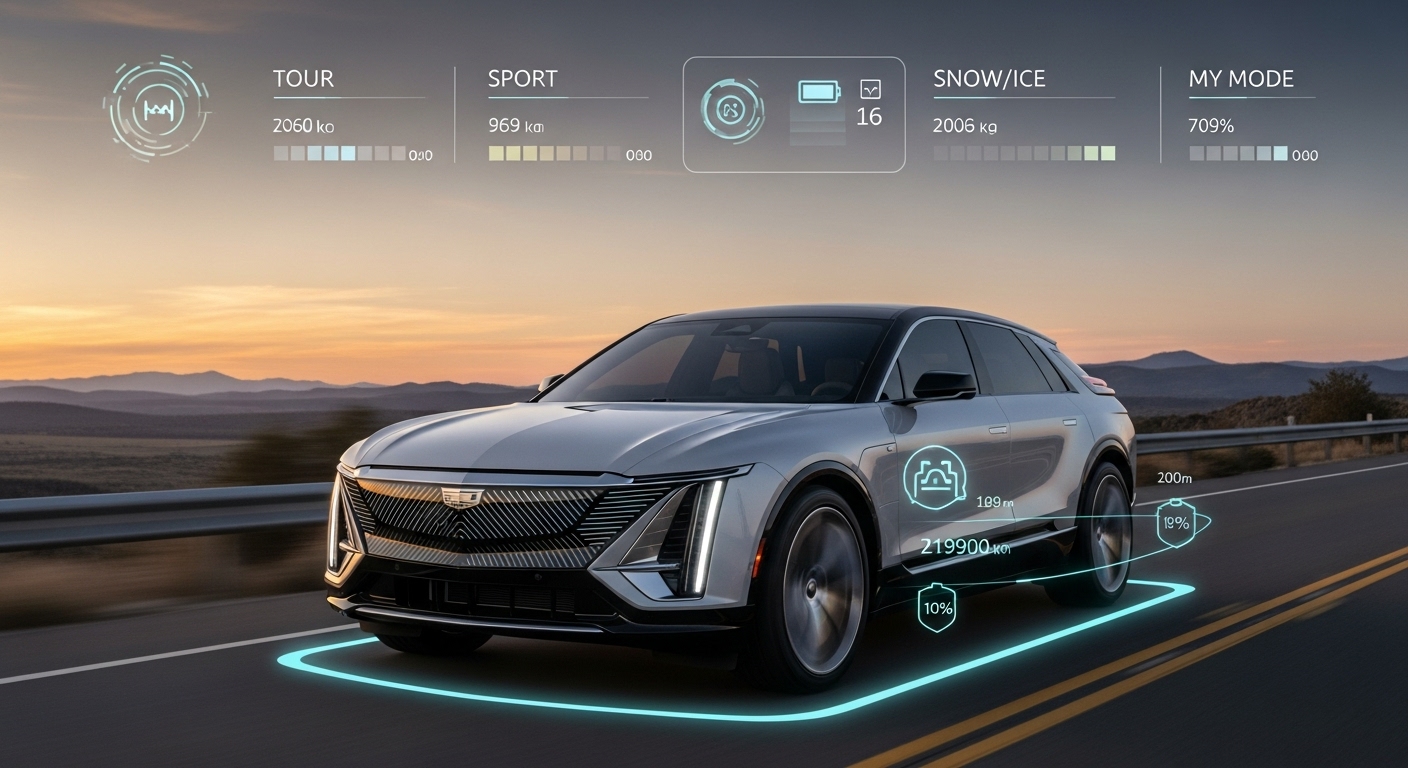
Understanding these modes isn’t just a matter of preference—it’s key to optimizing the Lyriq’s performance and efficiency. While all modes operate within the same 102-kWh Ultium battery system, the settings affect how efficiently the vehicle uses its stored energy. For instance, “Tour” mode prioritizes comfort and range, while “Sport” mode enhances power output and acceleration, often at the expense of energy conservation. “Snow/Ice” mode fine-tunes traction for challenging conditions, and “My Mode” allows drivers to personalize settings for a balanced experience.
In essence, the driving modes in the Cadillac Lyriq do influence both range and battery usage. Drivers who understand how to leverage these options can extend their range during long trips or maximize responsiveness when performance matters. In this article, we’ll explore how each mode functions, how much impact they have on range, and which is best suited for different driving needs.
Understanding the Driving Modes in the Cadillac Lyriq
The Cadillac Lyriq currently offers four primary driving modes: Tour, Sport, Snow/Ice, and My Mode. Each setting modifies the vehicle’s behavior by adjusting throttle response, steering effort, suspension feel (if equipped with adaptive dampers), and regenerative braking. For example, Tour mode is designed for everyday driving, offering a smooth, efficient experience with an emphasis on comfort and optimal energy use. Sport mode, on the other hand, sharpens acceleration and steering, appealing to those who want a more dynamic and responsive drive.
Snow/Ice mode provides additional stability by softening throttle inputs and enhancing traction control, making it ideal for slippery conditions. My Mode allows the driver to customize performance preferences, combining elements of other modes for a personalized balance of power and efficiency. While each mode uses the same electric drivetrain and battery, their differing calibrations impact how aggressively power is deployed and recovered. These changes influence not just driving feel, but also how efficiently the Cadillac Lyriq uses its stored battery energy—ultimately affecting range.
Read More: Winkelbohrspindel
How Driving Modes Impact Electric Range
When it comes to electric vehicles, range is the metric that matters most to many drivers. In the Cadillac Lyriq, driving modes have a measurable impact on this figure. In Tour mode, for instance, the vehicle optimizes energy efficiency by moderating power delivery and maximizing regenerative braking. This results in the longest possible range per charge—up to an EPA-estimated 314 miles for the rear-wheel-drive version. In contrast, Sport mode tends to reduce total range because it increases responsiveness and power output, which can draw more energy from the battery more quickly.
The impact isn’t enormous but noticeable. Drivers who frequently switch to Sport mode may see a reduction of 5–10% in overall range, depending on their driving habits and terrain. Even small changes—such as more aggressive acceleration or higher average speeds—can affect energy use. Therefore, those planning long trips or looking to minimize charging stops should favor Tour mode. Understanding this balance helps Lyriq owners get the most from each charge without sacrificing the luxury and power Cadillac promises.
Battery Usage Differences Between Modes
Battery usage in the Cadillac Lyriq is directly tied to how efficiently the electric motor converts stored energy into motion. In Tour mode, the power delivery curve is tuned to be gradual and predictable, reducing demand spikes that deplete the battery faster. Regenerative braking is also optimized to capture more kinetic energy during deceleration, feeding it back into the battery for additional efficiency. Over long drives, these features collectively reduce battery drain and help maintain a more stable energy profile.
In contrast, Sport mode changes the vehicle’s power mapping to deliver instantaneous torque for a more engaging experience. This quick surge of power demands higher current from the battery, leading to increased consumption. Drivers may also use less regenerative braking in this mode due to faster cornering and shorter braking distances, meaning less energy is recaptured. While this tradeoff results in thrilling acceleration, it comes with reduced overall efficiency. Knowing how each mode consumes energy helps drivers make informed decisions about when to prioritize performance or conservation.
Regenerative Braking and Its Role in Efficiency
Regenerative braking plays a vital role in the Cadillac Lyriq’s range management across all modes. This system recovers kinetic energy when the driver lifts off the accelerator or applies the brakes, converting it back into electricity to recharge the battery. In Tour mode, regenerative braking is tuned to be smoother and more consistent, maximizing recovery without compromising comfort. Over time, this steady energy recapture can extend the vehicle’s usable range—especially in stop-and-go city driving.
However, in Sport mode, the system prioritizes a more natural and dynamic driving feel, which may reduce the extent of energy recovery. Cadillac’s engineers have designed the Lyriq’s “Regen on Demand” paddle to allow manual control of regenerative braking intensity, giving drivers flexibility regardless of mode. This feature can help offset some of the higher consumption that occurs in performance settings. Understanding how regenerative braking interacts with driving modes allows owners to manage efficiency more effectively in daily use.
Terrain, Weather, and Real-World Range Differences
While driving modes significantly affect range and battery usage, external conditions such as terrain and temperature also play critical roles. The Cadillac Lyriq’s Snow/Ice mode, for instance, fine-tunes traction control and throttle response for slippery surfaces. Although this improves stability and safety, it may slightly increase battery consumption because traction systems require additional energy and the vehicle may operate less efficiently in cold weather. Lithium-ion batteries are inherently sensitive to temperature variations, and colder climates can reduce range by up to 20%.
Conversely, driving on flat highways in mild weather maximizes the benefits of Tour mode. Smooth, steady speeds with moderate use of regenerative braking deliver the best efficiency results. Cadillac’s onboard energy monitoring system helps drivers visualize consumption patterns in real time, showing how choices—such as switching to Sport mode or driving uphill—affect overall range. In the real world, understanding how environmental factors interact with driving modes enables owners to plan more efficient routes and charging strategies.
Choosing the Right Mode for Your Needs
Selecting the right driving mode in the Cadillac Lyriq depends on the driver’s priorities and conditions. For daily commuting or long-distance travel, Tour mode remains the ideal choice. It balances comfort, smoothness, and efficiency, ensuring you extract the maximum possible range from your battery. Drivers who enjoy spirited driving or want to experience the full potential of the Lyriq’s 340-horsepower electric motor may prefer Sport mode, though they should expect slightly lower range in return for sharper acceleration and handling.
In colder or slippery conditions, Snow/Ice mode is invaluable, offering controlled power delivery and enhanced traction to maintain stability. Meanwhile, My Mode provides flexibility, allowing drivers to tailor settings to their liking. By experimenting with different modes, Lyriq owners can find a balance that matches their driving style and energy goals. The key is to understand that while performance and efficiency trade off, Cadillac gives drivers the tools to choose the right balance for every situation.
The Future of Cadillac’s Driving Mode Technology
As Cadillac continues to refine its electric lineup, the driving modes in models like the Lyriq will likely become even smarter and more adaptive. Future software updates may allow modes to automatically adjust based on driver habits, terrain, and real-time energy data. This evolution could make it easier for owners to maintain efficiency without manually switching modes. Over-the-air updates have already enhanced the Lyriq’s infotainment and energy management systems, and similar improvements are expected for driving dynamics.
In the broader context of electric mobility, this adaptability reflects a shift toward more personalized and sustainable driving experiences. The Cadillac Lyriq demonstrates how technology can deliver both luxury and intelligence in motion. For now, understanding the current driving modes and their effects on range and battery usage remains the best way to maximize value and performance. As electric vehicles evolve, Cadillac’s balance of control, power, and efficiency positions it as a leader in the premium EV segment.
Conclusion
So, do the driving modes in cadillac lyriq offer different ranges or battery usages? Absolutely. Each mode fine-tunes how the vehicle uses its electric power, from conserving energy in Tour mode to unleashing full performance in Sport. While all modes share the same hardware, their calibrations significantly influence efficiency, range, and driving dynamics. For the best results, drivers should choose modes that align with their goals—Tour for long-distance efficiency, Sport for excitement, and Snow/Ice for safety in adverse weather.
Ultimately, the Cadillac Lyriq’s driving modes empower owners to shape their driving experience without compromise. By understanding how these settings affect range and battery use, drivers can make informed decisions that maximize enjoyment and minimize energy waste. As the electric vehicle landscape continues to evolve, Cadillac’s approach ensures that luxury, performance, and sustainability move forward together.
