

Introduction
In today’s fast-paced industrial landscape, precision and efficiency are not just advantages—they are necessities. Among the specialized tools that make this possible, the Winkelbohrspindel (translated as “angle drilling spindle”) plays a crucial role. This unique spindle design allows engineers and machinists to perform drilling, milling, and cutting operations in tight or angled spaces where standard vertical or horizontal spindles cannot reach. Its versatility and adaptability make it indispensable in fields such as aerospace, automotive manufacturing, toolmaking, and mechanical engineering.
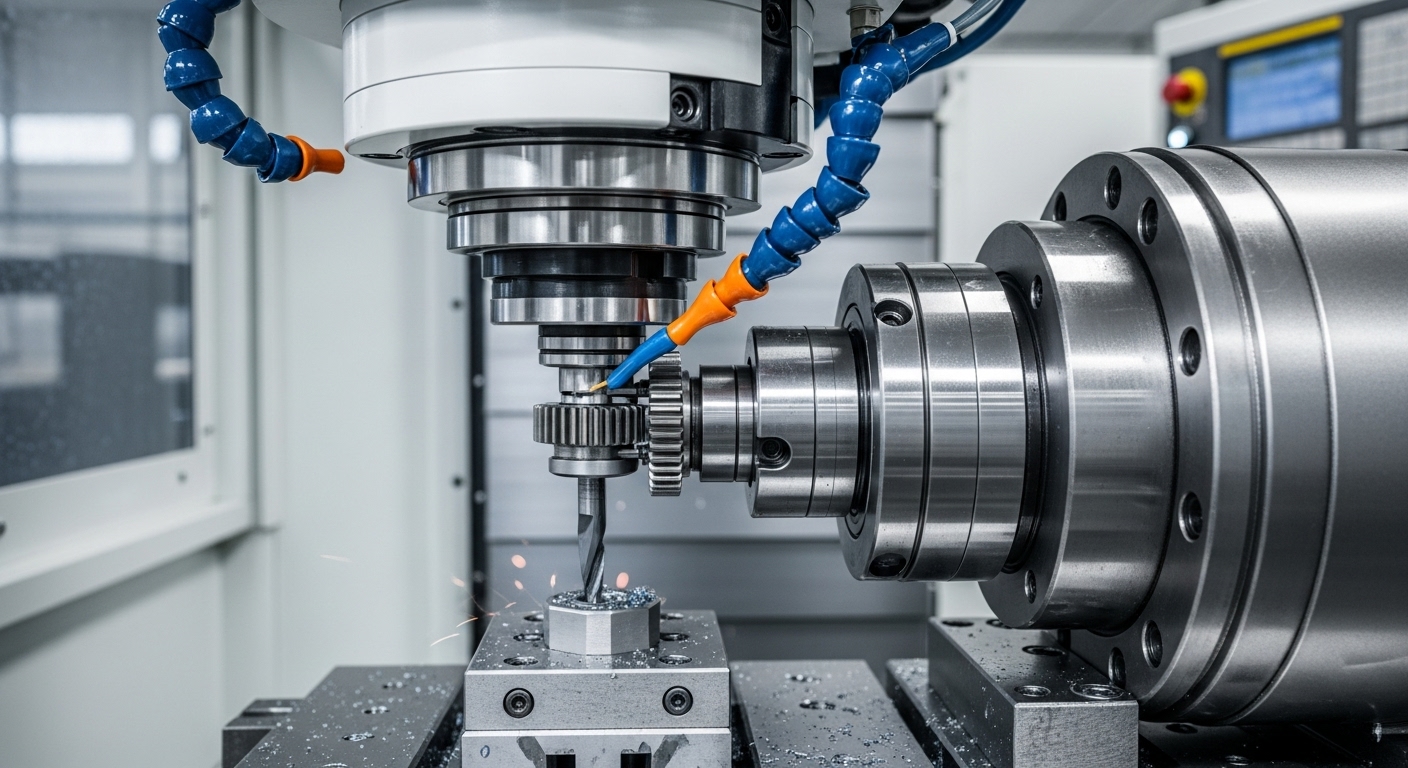
A Winkelbohrspindel is a precision-engineered component that transmits rotational motion at a specific angle—commonly 90 degrees—allowing for complex machining tasks in confined areas. Unlike conventional spindles, it is designed with angular gear mechanisms that ensure consistent torque and accuracy even under demanding conditions. As industries continue to demand higher performance, reduced downtime, and more flexible machining options, the Winkelbohrspindel has become a cornerstone of advanced manufacturing systems.
Whether integrated into CNC machines or used as modular attachments, these spindles enhance workflow efficiency by eliminating the need for complex repositioning or custom tooling. They not only optimize machining operations but also extend the functional reach of existing equipment. For manufacturers aiming to maintain competitiveness in global markets, adopting high-quality Winkelbohrspindeln means achieving superior accuracy, longer tool life, and lower production costs. This article explores the engineering behind these spindles, their variations, applications, and the latest technological innovations driving their evolution.
Understanding the Design and Function of a Winkelbohrspindel
At its core, a Winkelbohrspindel consists of precision gears, bearings, and drive mechanisms housed within a robust, compact body. The gears—often bevel or hypoid types—allow torque transfer at an angle, typically 90°, while maintaining minimal backlash. This angular transmission enables tools to access areas otherwise unreachable by conventional spindles. The design’s emphasis on rigidity, concentricity, and thermal stability ensures smooth operation even at high rotational speeds. Manufacturers often incorporate advanced materials such as hardened steel or titanium alloys to enhance durability and reduce wear.
Functionally, the Winkelbohrspindel acts as a torque transmitter and positioning tool. It attaches to machine tools or robots, redirecting power and motion precisely where needed. Modern versions often feature automatic tool-change compatibility, integrated cooling systems, and vibration dampening mechanisms. These enhancements significantly improve cutting precision and surface finish. As a result, operators can perform angular drilling, reaming, or tapping operations with greater control and consistency—critical for industries where tolerances are measured in microns.
Applications Across Diverse Industries
The Winkelbohrspindel is a versatile asset across multiple sectors. In aerospace manufacturing, it enables drilling and milling operations on complex, curved surfaces such as turbine blades or aircraft fuselages. Its ability to work at precise angles ensures structural integrity and alignment without manual repositioning. Similarly, in the automotive industry, Winkelbohrspindeln are used to machine engine blocks, gear housings, and transmission components—areas where space constraints demand compact yet powerful solutions.
Beyond these heavy industries, toolmaking and precision engineering also benefit from the Winkelbohrspindel’s capabilities. For instance, mold makers use these spindles to create intricate cavities and undercuts that standard machining tools cannot achieve. In robotics and automation, compact spindle modules allow flexible, multi-axis machining setups, increasing production speed while minimizing human intervention. Whether for prototyping or large-scale manufacturing, the Winkelbohrspindel continues to redefine what is possible in advanced machining environments.
Advantages of Using Winkelbohrspindeln in Modern Machining
One of the primary advantages of a Winkelbohrspindel is its ability to increase accessibility and flexibility in machining operations. By redirecting the cutting axis, it eliminates the need to reposition large or complex workpieces—saving time and reducing setup errors. This efficiency translates directly into higher productivity and lower operational costs. Moreover, the spindle’s design ensures precision even when operating under heavy loads or at unconventional angles, maintaining consistent results across multiple cycles.
Another significant benefit is the improvement in machining quality. The combination of advanced gearing systems and high-performance bearings allows for smooth rotation with minimal vibration. This not only enhances the surface finish but also extends tool life. Furthermore, Winkelbohrspindeln are often modular, meaning they can be easily adapted to various machines or integrated with automatic tool changers. Such flexibility empowers manufacturers to handle diverse projects without major reconfiguration, making these spindles an investment in long-term operational excellence.
Types and Configurations of Winkelbohrspindeln
There are several types of Winkelbohrspindeln, each designed to meet specific industrial needs. The most common is the 90-degree angle spindle, ideal for perpendicular drilling or milling. However, manufacturers also produce spindles with variable angles, allowing for multi-directional machining. Some configurations feature dual or multiple output shafts for simultaneous operations, maximizing throughput. Others are designed for high-speed applications, integrating precision-balanced components for exceptional stability at RPMs exceeding 40,000.
Additionally, Winkelbohrspindeln can be classified based on their drive type—mechanical, pneumatic, or electric. Mechanical spindles use direct gear-driven systems, favored for heavy-duty applications requiring maximum torque. Pneumatic and electric versions, on the other hand, are lightweight and easier to control, suitable for robotic systems and automated manufacturing lines. Choosing the right configuration depends on factors such as workpiece material, machining environment, and desired output precision. Understanding these variations helps engineers select the most efficient spindle for their specific production requirements.
Technological Innovations Shaping Winkelbohrspindel Development
Recent advancements in materials science and digital manufacturing have significantly enhanced the performance of the Winkelbohrspindel. The use of carbon-fiber-reinforced casings and hybrid ceramic bearings reduces weight while improving thermal resistance and rotational accuracy. These innovations allow spindles to operate longer without overheating or mechanical distortion. Additionally, computer-aided design (CAD) and simulation tools enable engineers to optimize gear geometry and load distribution before production, ensuring maximum efficiency and durability.
Smart manufacturing trends have also influenced spindle development. Modern Winkelbohrspindeln often come equipped with sensors that monitor vibration, temperature, and rotational speed in real time. Through predictive maintenance algorithms, this data helps prevent costly breakdowns and ensures consistent performance. Integration with Industry 4.0 systems allows operators to adjust spindle parameters remotely, optimizing productivity and energy consumption. As automation and AI-driven machining continue to evolve, the Winkelbohrspindel remains a pivotal component in the pursuit of intelligent, connected factories.
Maintenance and Longevity Best Practices
Proper maintenance is essential for extending the service life of any Winkelbohrspindel. Regular inspection of bearings, seals, and lubrication systems helps prevent premature wear and tear. Using manufacturer-approved lubricants and ensuring optimal operating temperatures minimizes friction-related damage. Equally important is alignment verification—misalignment between the spindle and cutting tool can cause chatter, dimensional inaccuracies, and reduced efficiency. Implementing a scheduled maintenance plan ensures reliable operation and minimizes unexpected downtime.
Cleaning and storage also play vital roles in spindle longevity. After each use, debris and coolant residues should be carefully removed to prevent corrosion or clogging of moving parts. For long-term storage, spindles should be kept in dry, vibration-free environments. Some manufacturers provide specialized cases with humidity control to preserve sensitive internal components. By following these best practices, businesses can ensure their Winkelbohrspindeln deliver consistent, high-precision performance for years, maximizing return on investment.
Choosing the Right Winkelbohrspindel for Your Operation
Selecting the ideal Winkelbohrspindel depends on a detailed understanding of your machining requirements. Factors such as torque capacity, rotational speed, spindle interface type, and cooling system compatibility must all be considered. High-speed spindles are suitable for delicate operations on lightweight materials like aluminum, while high-torque versions excel in heavy-duty steel machining. Additionally, ensuring compatibility with your existing machine tools or CNC systems will streamline integration and improve workflow efficiency.
Consulting with experienced spindle manufacturers or distributors can help identify the most appropriate model for your production setup. Many offer customization options—such as variable angle adjustments or specialized tool interfaces—to meet specific application demands. Investing in a high-quality, precision-engineered Winkelbohrspindel not only boosts output but also enhances the overall reliability of your machining system. When chosen wisely, the right spindle can become a cornerstone of continuous innovation and operational excellence.
Conclusion
The Winkelbohrspindel represents the perfect intersection of precision, flexibility, and innovation in modern machining. Its ability to perform complex angular operations with accuracy and speed makes it indispensable across industries ranging from aerospace to automation. As technology advances, these spindles continue to evolve—becoming lighter, smarter, and more efficient. For manufacturers seeking to enhance productivity, reduce costs, and expand machining capabilities, investing in high-quality Winkelbohrspindeln is a strategic step toward future-ready production. By understanding their design, maintenance, and application, businesses can unlock the full potential of these remarkable engineering tools and maintain a competitive edge in an ever-demanding global market.
